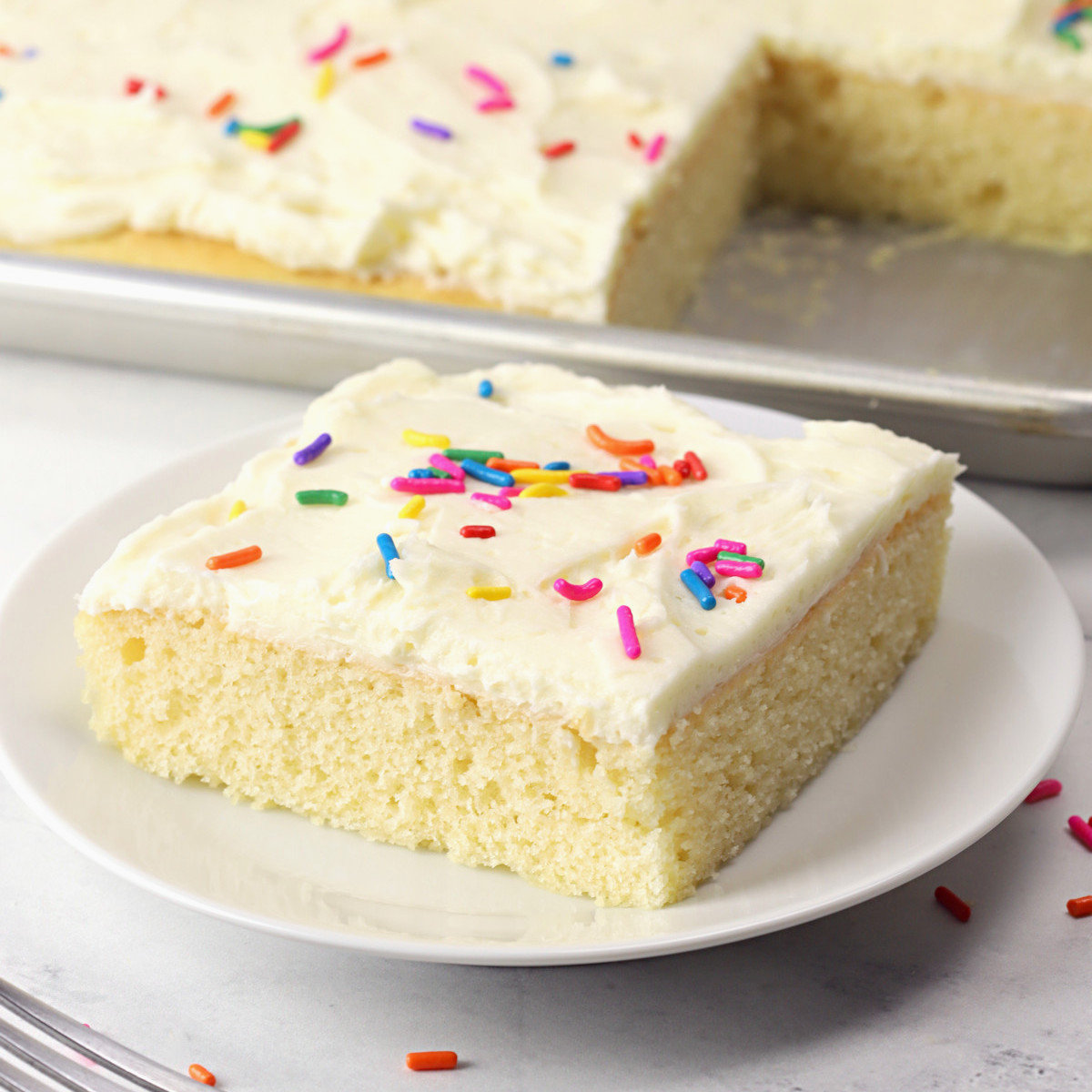
Classic Vanilla Sheet Cake: The Ultimate Blend of Soft Crumb, Fluffy Buttercream, and Easy Baking
There are few desserts as universally beloved and nostalgically comforting as a classic vanilla cake. It’s the sweet canvas for countless celebrations, a simple joy for an afternoon treat, and a flavor profile that speaks to the very heart of baking. But amidst the myriad of vanilla cake variations – from towering three-layer marvels to delicate cupcakes – there’s one format that often gets overlooked for its sheer brilliance: the vanilla
sheet cake. Today, we're not just making *any* vanilla sheet cake; we're crafting a masterpiece of tender crumb, rich buttery flavor, and a cloud-like buttercream that will redefine your appreciation for this simple classic.
Forget complicated stacking or intricate piping; this recipe champions simplicity without sacrificing an ounce of gourmet taste or texture. Our focus is on achieving an unparalleled softness and spring in every bite, perfectly complemented by a light, airy frosting. Whether it's for a birthday celebration, a holiday gathering, or simply to satisfy a sweet craving, this classic vanilla sheet cake is designed to deliver pure dessert bliss with minimal fuss.
Unlocking Velvety Softness: The Magic of the Reverse Creaming Method
What truly elevates this vanilla sheet cake from good to extraordinary is a technique often favored by professional bakers but surprisingly accessible to home cooks: the reverse creaming method. While traditional cake recipes typically start by creaming butter and sugar together, this ingenious approach flips the script, beginning with the dry ingredients. And the results? A uniquely soft, springy, and incredibly fine crumb that almost melts in your mouth.
So, how does it work? Instead of incorporating air into butter and sugar first, the reverse creaming method starts by combining all the dry ingredients – including the granulated sugar – in a bowl. Then, softened, room-temperature butter is added to this mixture. At this stage, the butter coats the flour particles, forming a protective barrier. This coating is crucial because it *minimizes the formation of gluten*. Gluten, while essential for structure in bread, can make cakes tough if overdeveloped. By reducing its formation, the reverse creaming method ensures a tender, tighter, and velvety-soft crumb, often described as having a pound cake-like density without being heavy.
After the butter has fully incorporated and the mixture resembles coarse sand, the wet ingredients – typically milk, vanilla extract, and eggs – are gradually added. The careful incorporation of these liquids ensures a smooth, emulsified batter that bakes up beautifully consistent. The subtle difference in texture is palpable: slices emerge with a refined, tight crumb that is still incredibly moist and almost creamy in taste. It’s a method that promises a cake that is wonderfully moist, richly buttery, and incredibly delicate. For an even deeper dive into this transformative baking technique, explore
Unlock Velvety Softness: The Reverse Creaming Sheet Cake Secret.
Crafting the Cloud-Like Buttercream: A Whipped Dream on Top
No classic vanilla sheet cake is complete without its crowning glory: a sumptuous, fluffy buttercream frosting. And for this particular cake, we're opting for a whipped vanilla buttercream that is the epitome of airy sweetness, perfectly balancing the richness of the cake.
Unlike some heavier, denser buttercreams, this whipped variation focuses on aeration to create a truly light and ethereal texture. It's a simple concoction of unsalted butter, confectioners' sugar (also known as powdered sugar), a splash of heavy cream, and, of course, a generous amount of pure vanilla extract. The magic happens during the whipping process: the ingredients are beaten together at a high speed for an extended period, incorporating an abundance of air that transforms them into a voluminous, almost meringue-like cloud.
The result is a frosting that isn't overly sweet, allowing the pure vanilla flavor to shine through. Its light consistency means it spreads effortlessly over the surface of the sheet cake, creating a smooth, inviting canvas for sprinkles, fresh berries, or any simple decoration you desire. It's the "giant fluff ball" that completes this dessert nostalgia trip, offering a delightful contrast in texture to the soft, springy cake beneath. To ensure your buttercream is perfectly cloud-like, start with room-temperature butter and sift your confectioners' sugar to prevent lumps. Beat on medium-high speed for at least 5-7 minutes until it's noticeably lightened in color and significantly increased in volume.
Why a Sheet Cake Reigns Supreme for Every Occasion
While multi-layer cakes certainly have their grandeur, the humble
sheet cake offers a pragmatic elegance that makes it an indispensable tool in any baker's repertoire. There's a reason why the sheet cake is a go-to for so many occasions, from school bake sales to sophisticated brunches.
* **Ease of Preparation:** Baking a sheet cake in a single pan (typically a 9x13-inch quarter sheet pan) eliminates the fuss of dividing batter into multiple rounds, leveling cakes, and complex stacking. It's a straightforward process that minimizes dishes and maximizes efficiency.
* **Effortless Frosting:** The flat, expansive surface of a sheet cake is a dream for frosting. Whether you're a novice or an experienced decorator, achieving a smooth, even layer of buttercream is incredibly simple. This makes it perfect for quick decorating with sprinkles, simple designs, or even a stencil.
* **Convenient Serving:** Cutting and serving a sheet cake is a breeze. No worries about collapsing layers or uneven slices. It yields consistent portions, making it ideal for feeding a crowd without a struggle. It’s the perfect solution for potlucks, parties, or any event where you need to serve many people efficiently.
* **Versatility:** From casual gatherings to more formal celebrations, a vanilla sheet cake can be dressed up or down. A scattering of rainbow sprinkles makes it a perfect birthday cake, while fresh fruit and a dusting of powdered sugar can elevate it for a brunch or garden party. For more ideas on how to make your sheet cakes shine, check out
Party-Perfect Sheet Cakes: Easy Recipes for Any Celebration.
This particular vanilla sheet cake recipe, with its optimized batter quantity for a 9x13-inch pan, strikes the perfect balance, ensuring you get that buttery, tight crumb of traditional vanilla cake in the ideal portion for a classic sheet cake.
Tips for Sheet Cake Perfection: Elevating Your Baking Game
Achieving the perfect vanilla sheet cake isn't just about the recipe; it's also about attention to detail. Here are some actionable tips to ensure your cake turns out flawlessly every time:
1.
Room Temperature Ingredients are Key: This cannot be stressed enough, especially for the reverse creaming method and buttercream. Butter, eggs, and milk at room temperature emulsify better, resulting in a smoother batter and a more uniform, tender crumb. Cold ingredients can lead to a lumpy batter and a denser cake.
2.
Measure Accurately, Especially Flour: Baking is a science. For flour, spoon it into your measuring cup and level it off with a straight edge. Scooping directly from the bag can pack too much flour, leading to a dry cake.
3.
Don't Overmix the Batter: Once you add the wet ingredients, mix only until just combined. Overmixing develops gluten, which we've intentionally tried to minimize with the reverse creaming method, and can result in a tough, chewy cake.
4.
Prepare Your Pan Properly: Lightly grease and flour your 9x13-inch pan, or line it with parchment paper for easy removal. This prevents sticking and ensures a clean release.
5.
Know Your Oven: Ovens can vary significantly. Invest in an oven thermometer to ensure your oven is truly at the temperature you set. Bake until a wooden skewer inserted into the center comes out clean or with a few moist crumbs attached, and the cake springs back when lightly touched.
6.
Cool Completely Before Frosting: Frosting a warm cake is a recipe for disaster. The buttercream will melt and slide off. Allow your cake to cool completely on a wire rack before even thinking about the frosting.
7.
Quality Vanilla Matters: Since vanilla is the star flavor, use the best quality pure vanilla extract you can find. It truly makes a difference in the final taste.
Embrace the Classic
This classic vanilla sheet cake is more than just a recipe; it's an invitation to rediscover the joy of simple, exceptional baking. With its unique reverse-creamed soft crumb, rich buttery flavor, and a generous topping of whipped, fluffy buttercream, it delivers a slice of pure dessert nostalgia. It’s the ideal birthday cake, the perfect potluck contribution, or simply the buttery taste you crave on a quiet afternoon. Easy to make, delightful to eat, and universally loved, this vanilla sheet cake truly proves that when it comes to classic desserts, simplicity often yields the most extraordinary results. So, preheat your oven, gather your ingredients, and prepare to fall in love with the ultimate classic vanilla sheet cake.